

Tennis court – turnkey construction with clay, tartan, or hard surface
We build professional tennis courts for sports clubs, municipalities, schools, authorities, and private investors across Romania. Clay, artificial turf, polyurethane tartan, or hard surface—each court is built in accordance with International Tennis Federation (ITF) standards.
Contact Us

Years of experience
Sports facility construction and playground development in Romania.

Dedicated professionals
that shape ideas

Completed projects
successfully for communities, institutions, and private partners.

Counties
Sports infrastructure developed nationally, consistently, and verifiably.
built with purpose
Why build a tennis court?
Tennis is recognized worldwide as one of the most complete physical activities, with major benefits for health, coordination, endurance, and mental well-being. Therefore, building a tennis court should be treated as a long-term investment in performance, safety, and quality.

Clay

Hard

Turf

Tartan


Tennis court construction from A to Z
Atlas Sport provides complete solutions for tennis court construction: site analysis, customized design, obtaining permits (where applicable), turnkey execution, installation of equipment, and final acceptance. You no longer need to coordinate different contractors. We manage the entire process and deliver a court ready to play.
Atlas Sport designs and builds professional tennis courts using modern technologies and certified materials. Each court is built in compliance with ITF regulations and tailored to real needs for playability, durability, and maintenance.
What are the dimensions of a tennis court?
We build courts to official dimensions (according to ITF):
Singles playing area: 23.77 × 8.23 m
Doubles playing area: 23.77 × 10.97 m
Recommended total area (competitions): 37 × 18 m
Minimum area (training/recreational): 34 × 17 m
Net height: 0.914 m (center)
Line width: 2.5–5 cm (baseline lines up to 10 cm)

Which surface type should you choose for a tennis court?
Atlas Sport builds tennis courts with four types of surfaces, each with specific advantages.
1. Clay tennis court – the traditional surface
Clay tennis courts are made from crushed natural stone and are one of the most appreciated playing surfaces worldwide, especially in Europe.
Technical structure: compacted crushed-stone base layer, intermediate layers with medium granulometry, final layer of fine clay perfectly leveled.
Types of clay available:
- Red clay – brick dust, the most widespread internationally
- Green clay – basalt gravel, harder and more resistant
- Grey clay – natural clay, specific drainage
- En Tout Cas – brick gravel, for varied conditions
Advantages of clay: slow, tactical play; excellent shock absorption; allows controlled sliding; lower surface temperature in extreme heat; lower construction cost.
Maintenance: requires regular brushing, watering, material top-ups, and periodic leveling.
2. Synthetic tennis court – the modern, low-maintenance solution
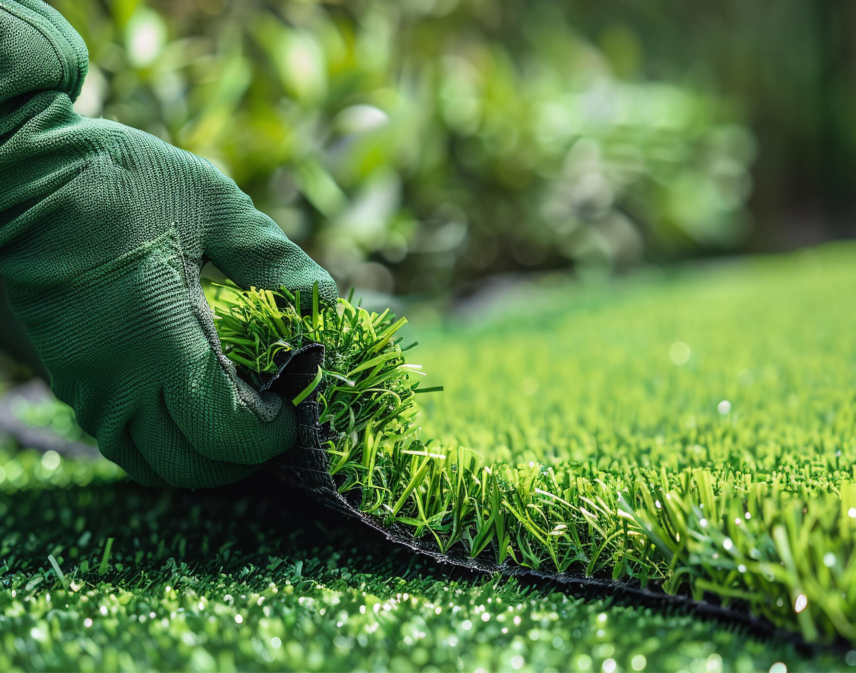
Artificial turf for tennis is designed to combine comfort, stability, and athletic performance, making it an excellent alternative to classic surfaces.
Technical structure: concrete or asphalt base, leveling layer, artificial turf carpet (12 mm pile), quartz sand infill.
Advantages: minimal maintenance, 7–10 years durability, use in any weather conditions, predictable ball bounce, medium pace of play.
Maintenance: periodic brushing and occasional sand top-ups. No watering or mowing required.
3. Polyurethane tartan tennis court – performance and comfort
Tartan is a high-performance technical surface, valued for its optimal combination of comfort, elasticity, and mechanical resistance.
Technical structure: concrete/asphalt base, elastic layer of rubber granules with polyurethane binder (shock absorption), wear layer of colored polyurethane compounds. Total thickness: 15–18 mm.
Advantages: excellent shock absorption, non-slip surface, UV and weather resistance, 15–20 years durability, easy maintenance.
Maintenance: periodic cleaning and occasional washing. No watering or material top-ups required.
4. Hard-surface tennis court – maximum durability
Hard-surface courts are among the most widely used internationally due to their high durability and predictable ball behavior.
Technical structure: rigid concrete/asphalt base, successive layers of acrylic materials, optional intermediate elastic layer, wear layer of special acrylic paint.
Advantages: very high durability, medium-to-fast pace of play, consistent ball behavior, weather resistance, ideal for competitions.
Maintenance: periodic cleaning and occasional resurfacing of the wear layer.
Recommendation: The choice of surface depends on playing level, frequency of use, budget, and the beneficiary’s preferences. Atlas Sport provides consulting to select the optimal solution.
Tennis court fencing
• Metal posts 3–4 m high, anchored in concrete foundations
• Protective fence made of plastic-coated galvanized wire
• Optional: windbreak textile mesh on the sides
• Access gate

What does a fully equipped tennis court include?
• Net posts with tensioning mechanism
• Approved tennis net (0.914 m height at the center)
• Umpire chair
• Player and spectator benches
• Perimeter protective fencing
• Night lighting: LED floodlights, electrical panel, and cabling
The night lighting system allows play in the evening and extends the court’s usable time.
How is a tennis court built?
A durable tennis court starts with the correct infrastructure. This includes:
• Stripping – removal of the topsoil layer using mechanical equipment
• Ballast layer – compacted, serving drainage purposes
• Crushed stone aggregate – for structural stability
• Concrete or asphalt – for synthetic, tartan, and acrylic surfaces
• Drainage and slope – for efficient water discharge
Health benefits:
• Develops coordination and reflexes
• Improves cardiovascular endurance
• Reduces stress and improves mental well-being
• Prevents obesity and associated health issues
• A sport accessible to all ages


why choose atlas sport?
Advantages for beneficiaries
Tennis courts are the ideal choice for: sports clubs, recreational facilities, schools, municipalities, residential complexes, and private investors.
Key advantages:
• Long-term investment – a professional tennis court lasts 10–20 years
• Health and fitness – tennis develops coordination, endurance, and mental well-being
• Rental income – the court can be monetized by the hour
• Added property value – increases the attractiveness of the complex
• Community impact – promotes sport and a healthy lifestyle

Solid and visible fencing
Metal fence with 6 m posts, certified dimensions and materials, metal or textile mesh resistant to UV and weather.

Solid and visible fencing
Metal fence with 6 m posts, certified dimensions and materials, metal or textile mesh resistant to UV and weather.
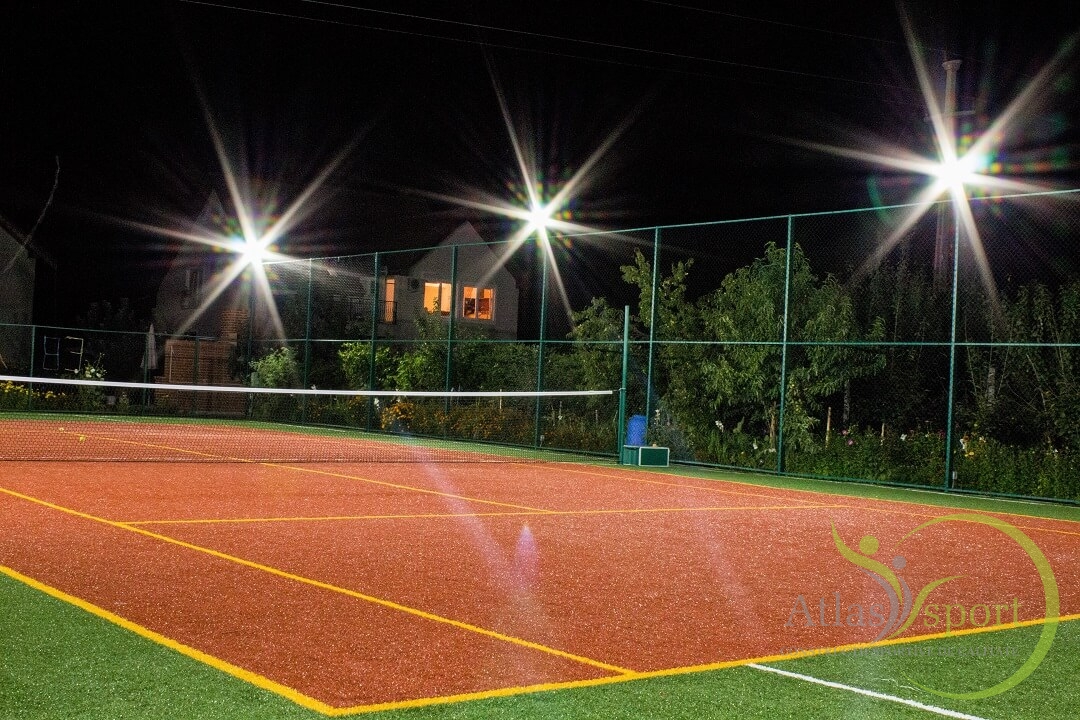
Night lighting
Strategically placed LED or halogen projectors, dedicated cabling and electrical installation for safe night use.

Night lighting
Strategically placed LED or halogen projectors, dedicated cabling and electrical installation for safe night use.

Multi-functional equipment
Mini-football goals, basketball hoops, mobile tennis/volleyball posts; support furniture (benches, referee chairs) adapted for varied use.

Multi-functional equipment
Mini-football goals, basketball hoops, mobile tennis/volleyball posts; support furniture (benches, referee chairs) adapted for varied use.

Ecological, social, and economic advantages
• Water savings
• Reduced maintenance (no mowing/seeds/fertilizers)
• Safe playing area
• Community inclusion, social development, and prevention
• Favorable cost/benefit ratio.

Ecological, social, and economic advantages
• Water savings
• Reduced maintenance (no mowing/seeds/fertilizers)
• Safe playing area
• Community inclusion, social development, and prevention
• Favorable cost/benefit ratio.
clients


Community benefits
Why are tennis courts essential?


A tennis court is not just sports infrastructure—it is an investment in the community’s health and development.
Clear process, guaranteed result
Every project follows a clear and predictable process, from initial assessment to final acceptance. At Atlas Sport, we manage all construction stages, so you can focus on what matters – the final result.
essential steps
Evaluation & design
Infrastructure & drainage
Surface installation & markings
Equipment & lighting
Final acceptance & maintenance recommendations
Success stories: tennis courts
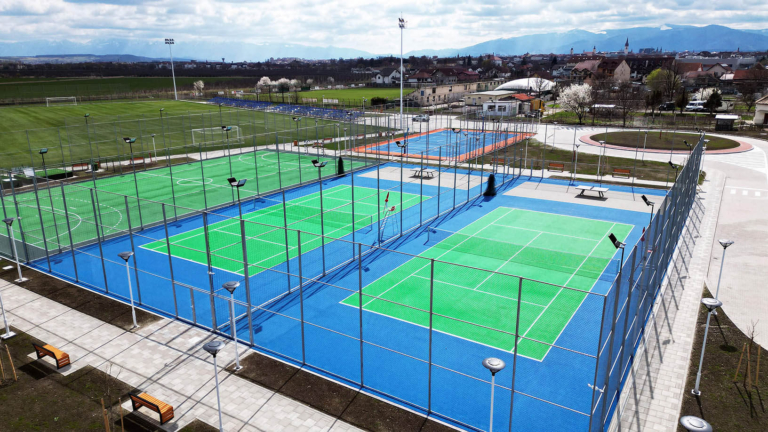
Each project is approached in an integrated manner, from the initial technical analysis and design to execution, finishing works, and commissioning.

Deputy Mayor, Sâncraiu de Mureș
Gal Sandor

Mureşan Florin
Primar, comuna Baciu

Frequently asked questions about tennis courts


What defines us?
A passion for excellence and attention to detail define every project, turning tennis courts into spaces for performance and safety.
Our team’s experience and innovation enable us to deliver customized, durable solutions at the highest standards—from training courts to competition arenas.
media appearances


Would you like to build a tennis court?
Would you like to find out how much a tennis court costs? Request a customized quote here!
Request a quote
The passion for excellence and attention to detail define every project, transforming sports fields into spaces of performance and safety. The experience and innovation of our team allow us to provide customized, durable solutions that meet the highest standards.

